







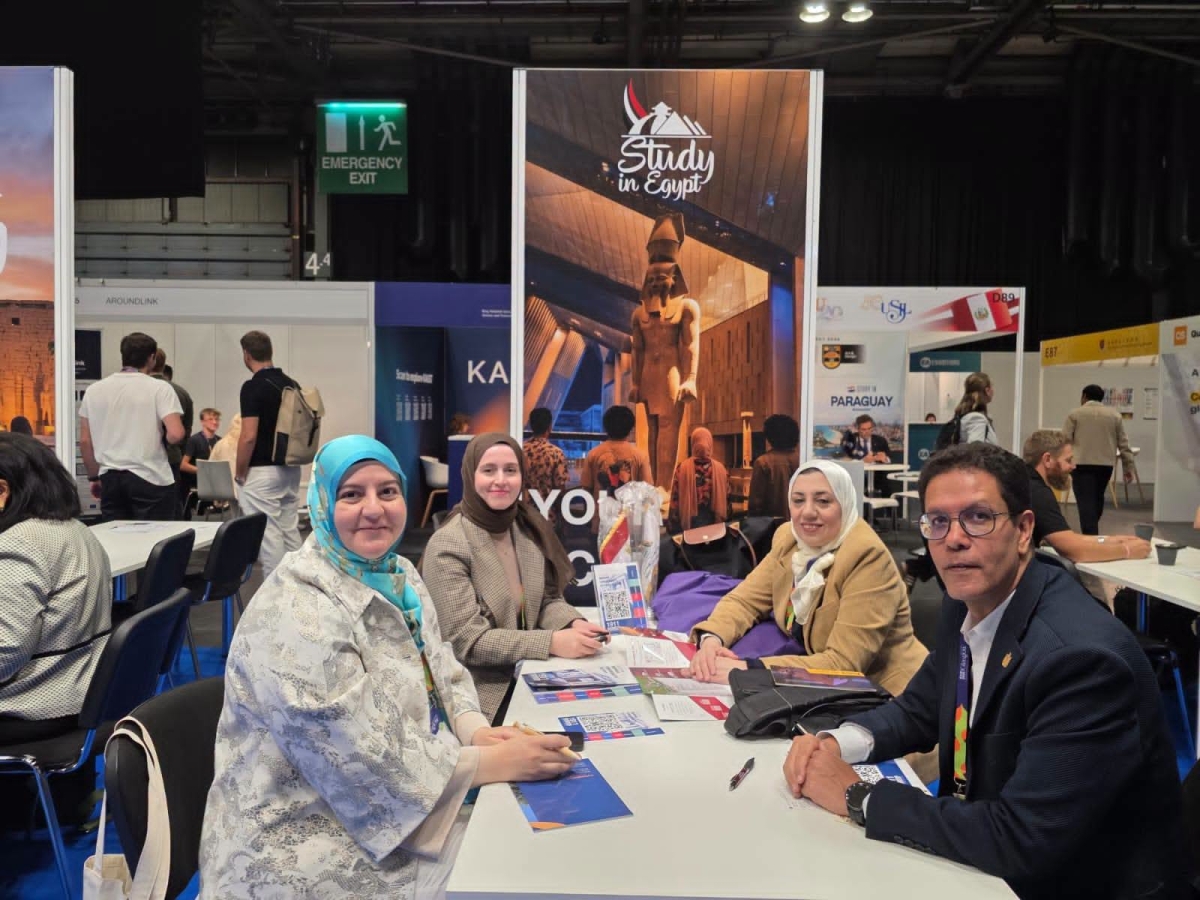
Benha University Participates in "EAIE 2026" Conference and Exhibition in Glasgow to Enhance International Presence and Expand Academic and Research Partnerships
"El-Gizawy": We aim to turn international partnerships into sustainable programs and projects that deliver direct benefits to students and researchers.
Under the patronage of Dr. Abdel Aziz Qansowa, Minister of Higher Education and Scientific Research, Benha University—led by University President Dr. Nasser El-Gizawy and attended by Dr. Jihan Abdel-Hadi, Vice President for Postgraduate Studies and Research—is taking part in the 36th Annual European Association for International Education Conference and Exhibition ("EAIE 2026"). The event is being hosted in Glasgow, United Kingdom, from September 8 to 11, bringing together over 9,000 participants, more than 1,000 institutions and organizations, and over 250 exhibitors from around the world.
The university's participation in this international gathering aligns with its drive to expand collaboration with global academic and research institutions and draw upon modern international expertise. This direction supports the Ministry of Higher Education and Scientific Research’s strategy to promote the internationalization of higher education and enhance the global competitiveness of Egyptian institutions.
Dr. Nasser El-Gizawy, President of Benha University, emphasized that participating in "EAIE 2026" offers a key opportunity for direct engagement with universities, educational organizations, and research bodies from across the globe, as well as for exploring collaborative fields that can advance the university’s academic and research endeavors.
Dr. El-Gizawy explained that meetings on the sidelines of the conference aim to explore joint and dual-degree academic programs, broaden student and faculty exchange opportunities, develop collaborative research initiatives, and leverage partnerships in innovation, entrepreneurship, training, and professional development.
The University President noted that building global connections is a core strategic pillar for Benha University, stressing that the objective extends beyond signing new agreements to actively implementing them through sustainable programs with tangible outcomes for students, researchers, and faculty members.
He added that the participating delegation is actively highlighting the university’s specialized academic programs, distinct fields of study, and research capabilities, while also marketing study opportunities to international students to support recruitment efforts.
The delegation's itinerary includes a series of bilateral meetings with representatives from international universities and institutions to explore areas of mutual cooperation, outline frameworks for transnational education programs, facilitate academic exchange, and advance joint research projects.
Dr. El-Gizawy concluded by highlighting that the coming phase will witness expanded collaboration with global institutions, prioritizing strategic sectors and aligning partnerships with educational, research, and innovation needs to support Benha University's vision of building impactful, long-term international relationships.
Source: Office of the University President – Media Center